
Living room design is one of the most important parts of any home’s interior architecture, as this space is usually the center of interaction, relaxation, and entertaining guests. An ideal living room should offer a balanced combination of beauty, comfort, and functionality so that family members feel relaxed and satisfied. In today’s world, where different styles of decoration design are changing rapidly, paying attention to design principles, creativity in layout, using modern materials, and intelligent use of light and color have become very important. In this article, we are going to review 0 to 100 living room designs. So don’t miss this article and follow us until the end.
What is a living room?
The living room is one of the most important spaces in every home, known as the beating heart of family life. This space is considered a place to relax, watch TV, chat with family members and entertain guests, and for this reason, its design, layout and decoration are of great importance. The living room is usually located in the center of the house and is equipped with comfortable furniture, a coffee table, a TV and decorative elements such as carpets, curtains and wall paintings. Proper lighting and the use of harmonious colors in this space can play an important role in creating a sense of peace and intimacy.
Since the living room interacts the most with the lifestyle of the residents, the selection of accessories and design should be done in accordance with the needs, tastes and available space. If you are looking for a modern, classic or minimalist interior design, special attention to the living room will play an important role in enhancing the beauty and efficiency of the home space.
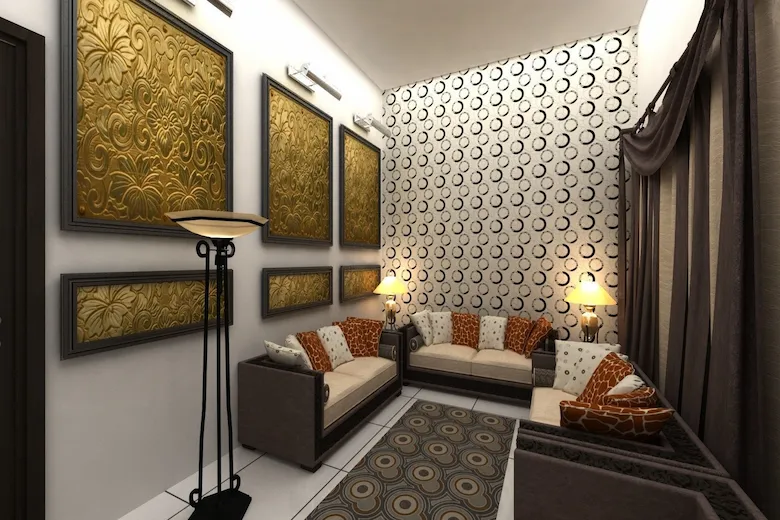
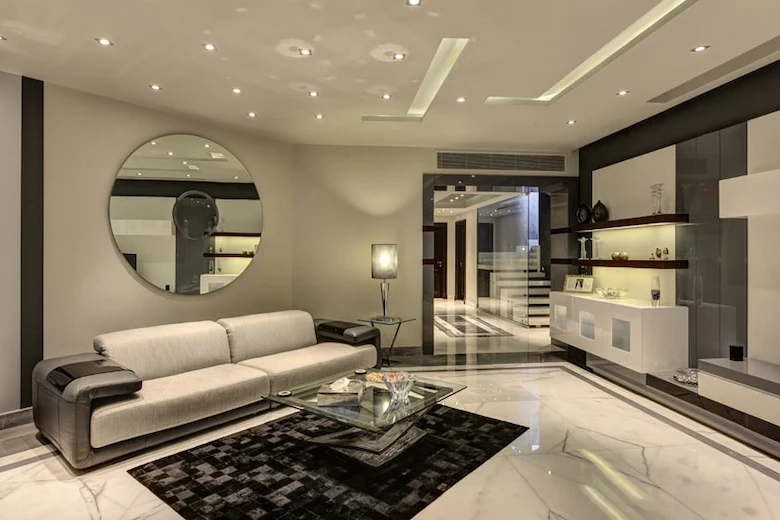
Living Room Design Principles
But as we said, living room design has a series of principles and rules that paying attention to can create a better experience for you and those around you. In this part of the article, we will examine these principles. Stay with us.
Determining the use and style of the living room design
The first and most important principle in designing a living room is to determine the use of the space and choose a decoration style that suits the family’s needs. For example, if the family spends a lot of time in the living room, it should be a comfortable, functional, and multipurpose space. The design style can be modern, classic, minimalist, or even a combination and should be in harmony with the rest of the house. In the early stages of construction consultation, determining the location of the living room and its lighting is also of great importance, and the final style is determined based on that.
Choosing the right furniture and layout principles
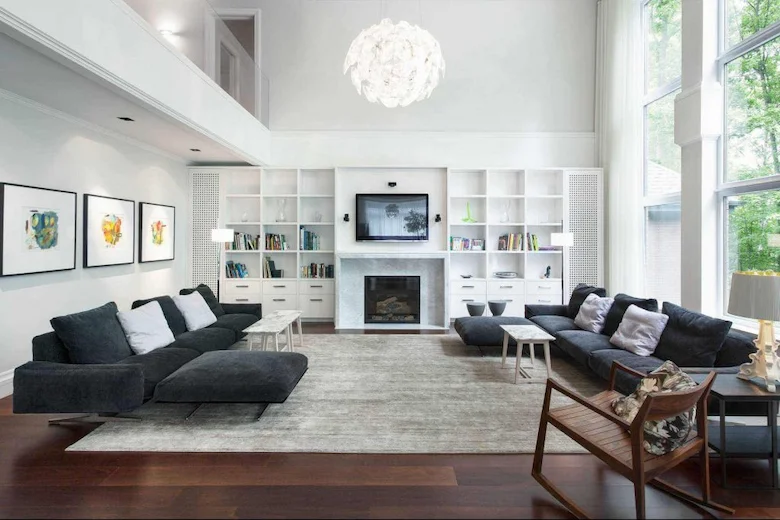
Furniture is the heart of the living room design and should be in harmony with the overall space in terms of dimensions, color, material, and comfort. The furniture should be arranged in such a way that movement in the space is easy and the visual focus is directed towards the focal point of the room – such as the TV or fireplace. Using a coffee table, poufs, and side chairs can make the space more efficient. Paying attention to these points is one of the basic principles in designing a successful living room decoration.
Proper and multi-layered lighting
Living room lighting should be designed in a multi-layered way so that the appropriate amount of light can be adjusted at any time of the day. Using natural light, ambient light (such as a chandelier), task light (such as a lampshade), and accent light (such as hidden or wall lights) helps to make the living room space warm, inviting, and functional. The combination of warm and cool lights, while observing the principles of light balance, increases the sense of calm and makes the room space appear dynamic and alive.
Using harmonious colors and textures
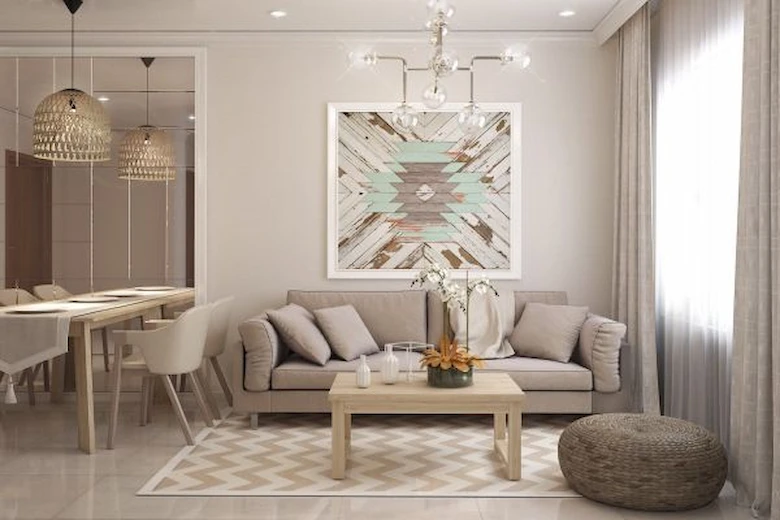
Colors play a very important psychological and visual role in living room design. The choice of colors for walls, furniture, carpets, and curtains should be based on harmonious and complementary combinations so that the space looks balanced and pleasant. Also, using various textures such as wood, fabric, metal, and glass can add to the visual appeal of the space. If materials such as Thermowall are used in wall coverings, it not only enhances the beauty of the space but also helps in soundproofing and thermal insulation of the room.
Pay attention to decorative elements and personalizing the space
Details such as art paintings, houseplants, candles, lampshades, bookcases or even family photo frames can transform the living room into a warm, intimate and special environment. These elements give the space personality and strengthen the sense of belonging to the home. Of course, balance must be observed in the selection and number of these items so that the space is not too crowded or cold. A good living room is a reflection of the lifestyle and taste of family members and can be transformed into an inspiring environment with simple elements.
Designing the space by considering dimensions and scale
One of the key points in designing a living room is to pay attention to the dimensions and scale of the components in relation to the overall space. Using excessively large furniture in a small space or vice versa creates imbalance and a feeling of disharmony. If your living space is limited, using low-profile furniture, folding tables, and optimal layout can provide more space for movement and better use. Also, in large spaces, you should use bulkier furniture and visual divisions such as carpets, bookcases, or consoles so that the space does not look empty and cold. This issue should also be considered in the initial construction consultation sessions so that the dimensions of the room meet the family’s decorative needs.
Visual connection of the living room with adjacent spaces
The living room is usually located next to spaces such as the kitchen, dining room, or entrance to the house, and for this reason, creating visual harmony and coherence between these spaces is very important. Using similar colors, uniform flooring, or common decorative elements can create this continuity well. Also, in today’s homes where open-plan design has become more common, the importance of this visual connection is doubly important. Even the right choice of curtains, lighting, and furniture direction can help to better separate or connect these spaces. A well-designed living room should take into account all components of the surrounding environment to provide a seamless and pleasant experience for users.
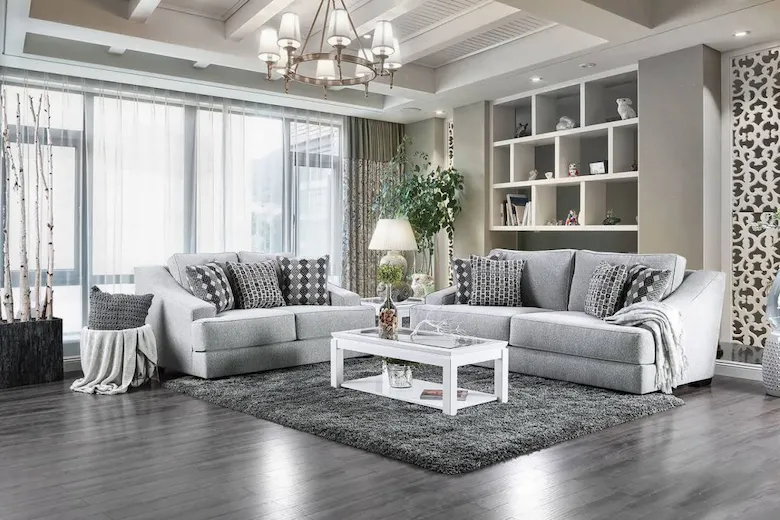
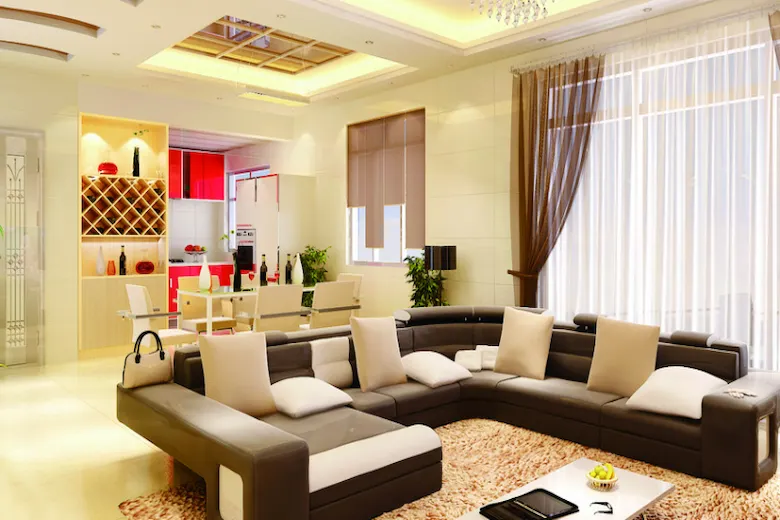
5 Golden Ideas for Living Room Design
But it would be a good idea to review a few simple but key principles that can help you in designing your living room decoration. Stay with us.
Smart use of hidden storage spaces
One of the golden ideas in living room design is to use hidden storage spaces in furniture, coffee tables and consoles. These spaces allow you to store additional items such as books, TV remotes, blankets or children’s things in an orderly and out of sight way. Such designs help maintain order and beauty of the space and increase the functionality of the living room. In homes with a minimalist or open plan design – such as combining the design of the kitchen with the living room – visual order plays an important role in instilling peace and beauty.
Using an accent wall with a specific texture or color
One way to attract attention and increase visual appeal in the living room is to create an accent wall with a specific color, material or texture. This wall can be placed behind the TV, fireplace or main sofa and designed using strong colors, wooden thermowall, decorative brick or patterned wallpaper. The smart choice of color or texture makes the other components of the space stand out more. This method is also used in combination with other parts of the house, such as bedroom design, and creates a unified interior decoration.
Combining different materials to create visual variety
An idea that most professional designers use is to combine different materials such as wood, metal, glass, fabric, and stone in the decoration of the living room. This balanced combination can take the space out of monotony and give it a sense of depth and more personality. For example, using a wooden coffee table with metal legs next to fabric sofas and glass lamps creates a luxurious and warm space. If you are in the planning stage, taking advantage of construction consulting will make the selection of materials technically, aesthetically, and budget-optimized.
Using houseplants for freshness and positive energy
Plants play a unique role in increasing the sense of peace and freshness in the living room. Adding a few houseplants like Sansevieria, Ficus, Pothos, or Monstera in corners, on tables, or on wall shelves will make the space look lively and dynamic. In addition to being beautiful, plants also help purify the air and add positive energy to the space. This simple and inexpensive technique can be used in all modern and traditional designs, and along with other areas such as kitchen design and entrance area, it can create complete harmony in the home.
Layered lighting with an emphasis on natural light
The proper use of natural light and its combination with artificial light is one of the most important ideas for living room design. The use of large windows, semi-transparent curtains, or full-length glass allows daylight to enter the space well and conveys a sense of openness and energy. At night, layered lighting with a combination of lampshades, hidden ceiling lights, wall lights, and ambient lighting creates a pleasant and warm atmosphere. This is also important in the design of houses built with modern systems such as LSF structure, as the flexibility of these structures allows for better use of light and space.
Final Words
As you can see, in this article, we have thoroughly reviewed the living room decoration design guide. We learned that successful living room design goes beyond choosing furniture and wall colors; this process requires a deep understanding of the needs of the users, the physical characteristics of the space, and the family’s lifestyle. Observing principles such as choosing appropriate furniture, proper lighting, choosing harmonious colors, using natural plants, and paying attention to the dimensions of the space all help create a pleasant and beautiful environment. Also, paying attention to the visual connection of the living room with other spaces in the house, such as the design of the kitchen and the entrance area, strengthens the coherence of the design. Thank you for your support until the end of this article.
Nobility Construction Group specializes in decoration design, design and implementation of LSF structures, design and implementation of kit house, construction consulting, and property and asset management. You, our esteemed companions, can contact our experts through communication bridges to obtain more information and receive free advice and benefit from free advice.